+1 647 637 9108
 +1 917 477 8991
 +91 93281 27044


 +61 3 9013 3988

Hiring dedicated developers in India is not about outsourcing anymore; instead, it is a strategic growth resource in 2026 for USA-based startups, SMBs, and enterprises.
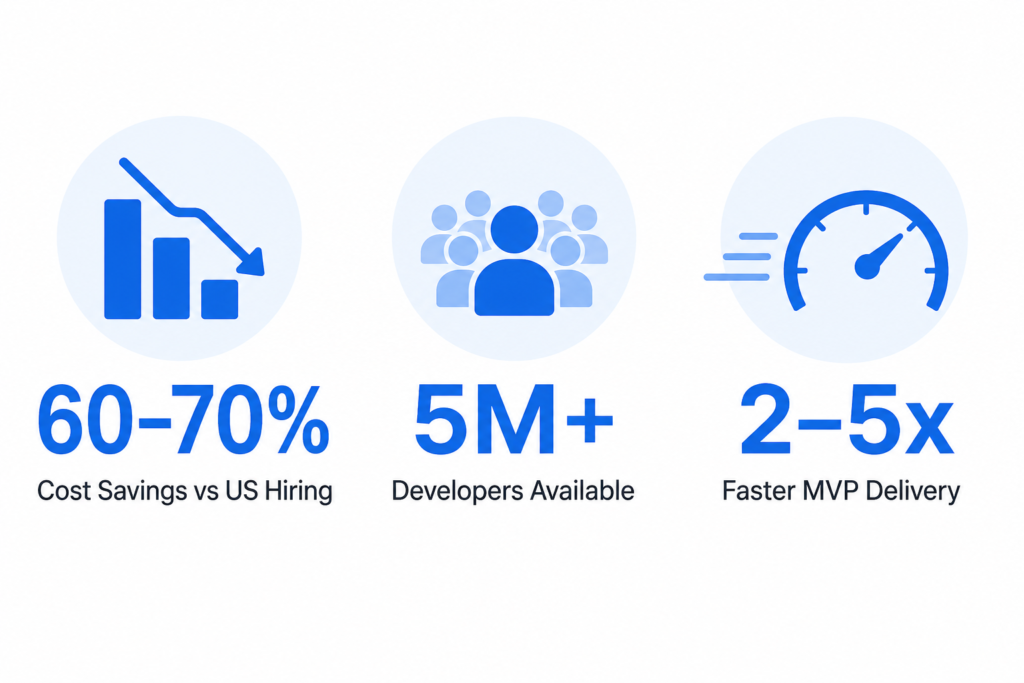
Startups are choosing India for speed, scale, and sustainable product development, not just cost. With AI-assisted workflows, a dedicated team in India today can match the output of a USA team twice its size, at a fraction of the burn rate.
Why US Startups Are Shifting to Dedicated Developers in 2026
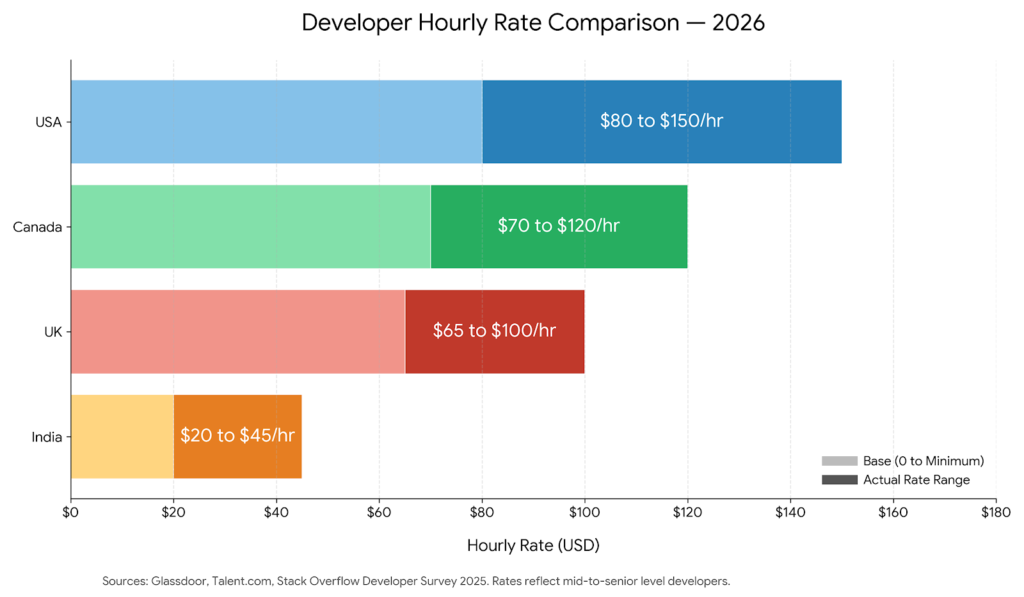
(1) USA Engineering Salaries Haven’t Come Down: The average software developer in the USA now costs $120,000 to $180,000 per year as salary (only), before benefits, equity, and recruitment fees. For an early-stage startup burning runway, that is one hire away from cutting your growth timeline in half.
(2) AI Made Teams Leaner, Not Cheaper: Tools like GitHub Copilot and AI code assistants made individual developers more productive, but they didn’t lower US developer salaries. What they did do: make a skilled team of 4 in India as productive as a team of 8 in San Francisco.
(3) Remote-First is Now a Default Operating Model: Post-2024, the sigma around distributed teams is gone. US startups already manage their own employees across time zones. Adding a dedicated team in India is just one more Slack channel, not a foreign concept.
What Does Hiring Dedicated Developers India Mean?
Before looking into the “why,” it is worth clearing up what “dedicated developers” actually means, because it is different from freelancing or project outsourcing.
A dedicated development team is a group of full-time remote engineers who work exclusively on your product, report to your team, and follow your processes, just like in-house employees. You get direct communication, daily standups, code ownership, and the ability to scale the team up or down based on your project needs.
| Hiring Model | Cost | Control | Scalability | Best For |
| In-house (US) | Very high | High | Medium | Core leadership, IP-critical roles |
| Freelancers | Low-mid | Low | Low | One-off tasks, quick fixes |
| Dedicated Team (India) | Medium | High | Very high | Product development, scaling startups |
| Project Outsourcing | Medium | Low | Medium | Fixed deliverables with clear specs |
7 Strategic Reasons USA-based Startups Hire Dedicated Developers In India
These aren’t generic bullet points. Each reason here maps to a real business outcome, the kind that shows up in your runway, retention, and revenue.
(1) Cost Efficiency – Reinvestment Advantage
(↓60% to 70% Engineering Costs)
If you are thinking, “What is the benefit of hiring developers in India in terms of cost?” then think like this: A US startup spending $30,000/month on two local developers can hire a full-stack team of 5 to 6 professionals in India within the same budget. That unused capital goes back into product, marketing, or customer acquisition, and this is how you have to plan the whole project. Indian developers for startup growth are not just a budget line; they are a reinvestment engine.
(2) Access to a Wide Talent Pool
(5.8M+ Active Developers in India)
India produces over 1.5 million engineering graduates annually. The developer ecosystem spans React Native, Flutter, Python, Node.js, Laravel, ASP.NET, AWS, AI/ML, DevOps, and more. When you need any professional developer’s service support, the talent exists and is ready to be onboarded.
(3) Faster MVP and Product-Market Fit
(MVP in 8 to 14 Weeks (vs 6+ months in-house))
Indian offshore teams have hands-on experience in building MVPs across SaaS, fintech, healthtech, e-commerce, logistics, and more. They don’t learn from your project; they bring a strategy. Combined with agile, sprint-based delivery, your first working product gets in front of users months earlier. That is earlier feedback, earlier revenue, and earlier adjustments if needed.
(4) Scalability – Without Hiring Bottlenecks
(Scale 2 → 20 Devs in Weeks)
When you hire in the US, scaling from 2 to 10 engineers can take 6 to 12 months, including job posts, interviews, offers, and notice periods. With a dedicated offshore development team in India, that same growth can happen in 3 to 6 weeks. You get the infrastructure of a large engineering organization without the operational drag of building one from scratch.
(5) Time Zone Advantage = 24-Hour Development Cycle
(10 to 12 Hours of Development Window)
India Standard Time (IST) is 9.5 to 12.5 hours ahead of US time zones. When your US team wraps up at 5 PM, your Indian team is already mid-shift. You leave comments on a pull request at the end of the day; they are merged by morning (US). For early-stage startups needing velocity, this is not a disadvantage. It is a second shift.
(6) Expertise in Modern Tech Stack
(AI, Cloud, Full-stack Expertise Available)
The Indian developers’ ecosystem has matured significantly. You will find teams fluent in React Native, Flutter, Next.js, Laravel, ASP.NET Core, AWS, GCP, Azure, Docker, Kubernetes, and LLM integrations. And they are not juniors; they will be the senior developers with 8 to 12 years of experience who are readily available at rates that would be considered entry-level in the USA.
(7) Better Cost-to-Output Ratio – Not Just Cheap Talent
(Higher Output Per Dollar Spent)
The metric that matters is not hourly rate; it is output per dollar. A senior developer in India at $53/hr, working in an organized sprint structure with strong code review practices, consistently delivers more usable output per month than a junior developer in the USA at $90/hr working in a disorganized startup environment. Founders who have worked with both consistently report this.
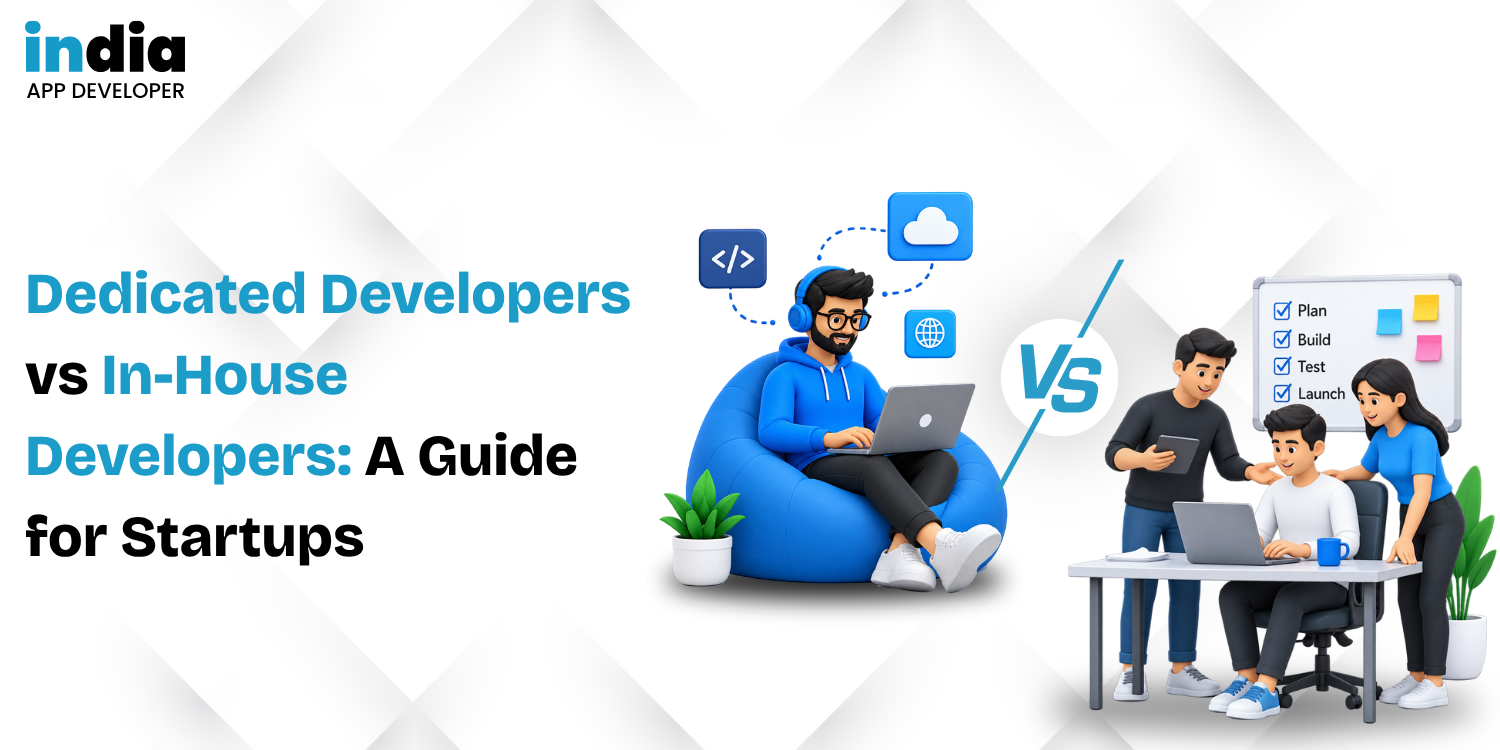
Hiring Developers: In-house (USA/Canada) vs Dedicated Teams (India)
This is not a debate about quality. It is about where different models make strategic sense at different startup stages.
Factors | In-house | Dedicated Team |
Monthly Cost (Dev team of 5) | $60,000 to $100,000 or more | $18,000 to $35,000 or more |
Hiring Speed | 4 to 12 weeks per hire | 1 to 3 weeks for the full team |
Talent Availability | Competitive, limited supply | 5.8M+ developer pool |
Scalability | Slow, operationally heavy | On-demand, flexible |
Control & Visibility | High | High |
Time Zone | Same (limited hours) | Offshore (24-hr dev cycle) |
Best Stage | Series A+ core leadership | Pre-seed → Series B Scaling |
Common Myths and Facts About Hiring Developers in India
❌ Cheap means low quality
✔️ Lower cost reflects lower cost of living – not lower skills
India’s top developer ecosystems (Bangalore, Hyderabad, Pune, Mumbai, and Ahmedabad) are globally benchmarked. Many senior developers have worked with US companies directly or hold international certifications. The rate difference is geographic, not competency-based
❌ Communication will be the problem
✔️ English is an official language in Indian tech – not a workaround
India is one of the largest English-speaking countries in the world. Technical documentation, daily standups, Slack communication, and code reviews are all conducted in fluent English. With modern async tools, communication friction is lower than managing a distributed US team across time zones.
❌ You lose control over your product/services
✔️ The dedicated model was specifically designed to solve this issue
Dedicated developers work under your architecture decisions, your sprint cycles, your code review process, and your tools. You own the code, the repos, and the product direction. The only difference is that they are not in the same office premises.
❌ Offshore teams don’t understand the US business context
✔️ Indian developers have been building US products for two decades
A large portion of Silicon Valley’s engineering workforce is of Indian origin. Offshore teams building US-focused SaaS, fintech, logistics, etc., have familiarity with US compliance needs, UX expectations, and product standards.
When Should a US Startup Hire Dedicated Developers in India?
This model is not for everyone at every stage. The following is when it works the best.
(1) MVP Development: You have an idea and need a digital product quickly without spending through your entire investment round on salaries.
(2) Scaling SaaS Startups: Your product is live, users are growing, and you need to introduce new features faster than your current team can ensure.
(3) AI Product Development: You need ML engineers, LLM integration specialists, or data pipeline developers, roles that are scarce and expensive in the USA.
(4) Mobile App Builds: React Native or Flutter development for iOS and Android, where specialized skills are needed quickly.
(5) Post-series A Scaling: You have raised and need to triple engineering capacity in 60 days without tripling your burn rate.
(6) Legacy Modernization: You need to rewrite an old .NET or PHP codebase; plenty of ASP.NET and Laravel experts are available.
How to Hire a Dedicated Development Team India
The process doesn’t have to be complicated. The following is a structured framework most successful US startups follow.
(1) Define Your Scope Clearly
Before reaching out to any company, document your tech stack, MVP features, timelines, and team structure needs. Vague briefs lead to mismatched hires.
(2) Choose an Engagement Model
Decide between a fully managed team, staff augmentation (adding to your existing team), or a hybrid model. Each has different onboarding needs and cost structures.
(3) Vet Technical Skills Rigorously
Don’t just review a portfolio; run a paid technical assessment or a 1-week paid pilot task to check the actual ability. Look for code quality, documentation habits, and communication style.
(4) Set Communication Infrastructure Early
Agree on tools (Slack, Jira, GitHub), meeting schedule, sprint length, and how to remove blockers. This prevents 80% of future frictions.
(5) Run a Paid Pilot Project First
Before committing to a 6-month contract, run a 3- to 4-week pilot on a real but non-critical feature. Use this to assess output quality and team dynamics.
(6) Scale Gradually, Then Aggressively
Start with 2-3 developers, validate the workflow, then scale the team. Don’t onboard 10 developers on day one; even a great team needs ramp-up time.
Mistakes US Startups Make When Hiring Developers in India
Most failed offshore experiences come down to the same handful of avoidable errors.
(1) Choosing the Cheapest Option Available: There is a floor below which quality collapses. If a team is offering $8/hr for senior developers, something is not right. The goal is value per dollar, not the lowest dollar figure.
(2) Skipping Technical Validation: Trusting a portfolio or sales call without running a technical assessment is how startups end up with teams that can’t build what they promised. Always validate skills before signing.
(3) Poor Communication Setup: Assuming the team will figure out communication on their own is a mistake. Build the infrastructure first, including daily standups, async updates, and escalation paths, before the first sprint.
(4) Treating Offshore as “Set It and Forget It”: Dedicated developers need product context, clear priorities, and regular feedback, just like any engineering team. Hands-off management leads to misaligned output.
(5) Hiring Without Signing NDAs: Before sharing your codebase, ensure NDAs, IP assignment agreements, and data security protocols are signed and clear. Reputable partners will have these ready; others won’t.
Why Leading US Startups Choose IndiaAppDeveloper
There is a difference between hiring developers in India and hiring the right dedicated team in India.
At IndiaAppDeveloper, the model is built for US-based startups, SMBs, and enterprises, specifically non-generic project outsourcing. The team specializes in the tech stacks that matter most to growth-stage companies:
- Hire React Native App Developers: Cross-platform mobile apps for iOS and Android with a single codebase and faster TTM.
- Hire ASP.NET Developers India: Enterprise-grade .NET development for SaaS platforms, internal tools, and scalable backends.
- Hire Laravel Developers India: Full-featured PHP backends with clean architecture, ideal for rapid API and product development.
- Hire Flutter developers in India for scalable, high-performance UI across iOS and Android
- Hire iPhone App Developers in India and Hire Swift developers in India for native iOS experiences
- Hire Android developers in India for robust, production-ready Android apps
- Hire Mobile App Developers who can take your idea from MVP to scale
- Full-stack web development, cloud-native infrastructure, and AI/ML integration expertise.
- US-timezone-friendly standups, async-first communication, and direct access to your developers, with no account manager in between.
The team at IndiaAppDeveloper is aligned to your project vision, not just your task list. That is the difference between a development partner and a long-term engineering partner.
Conclusion
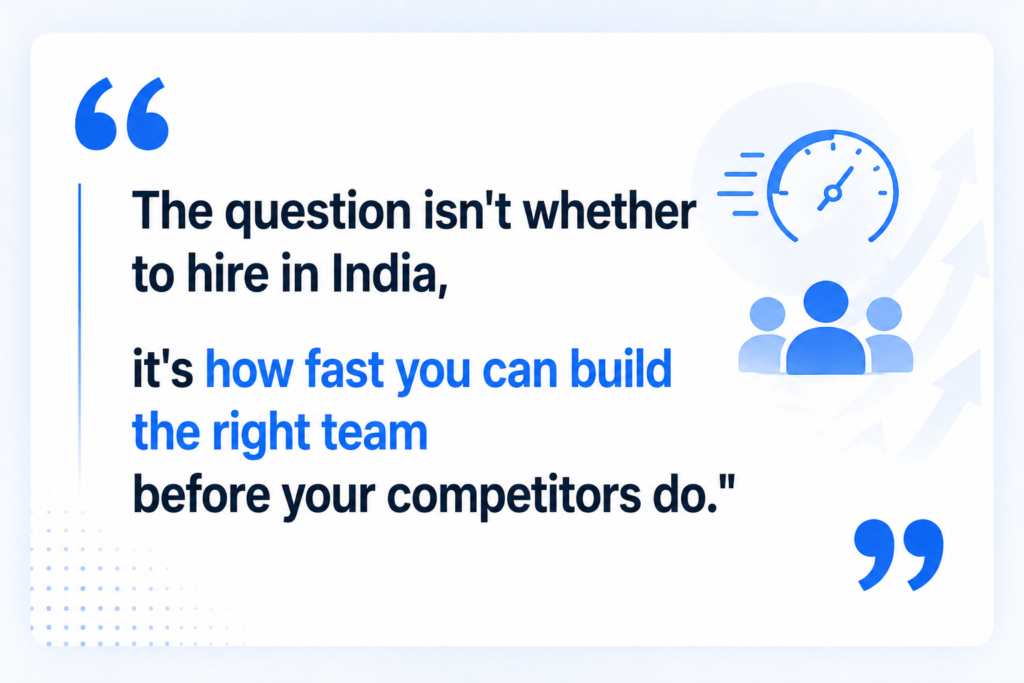
The conversation has shifted. US startups are not asking whether to hire dedicated developers in India; they are asking how fast they can do it before their better-funded competitors do.
The math is hard to argue with: 60% to 70% in cost savings, a talent pool of 5.8M+ developers, faster MVP cycles, and the ability to scale from 2 to 20 engineers in weeks, not quarters. When those advantages are stacked against the operational reality of US hiring in 2026, the strategic case is not just compelling. It’s obvious.
The companies winning right now are not always the ones with the most funding. They are the ones who figured out how to build more with less and build it faster.
India is not an outsourcing destination anymore. For US-based companies that get this right, it’s where their competitive advantages live.