+1 647 637 9108
 +1 917 477 8991
 +91 93281 27044


 +61 3 9013 3988
Developing a mobile application in 2026 is not only about choosing the right technology. It is also about finding the right app development company that can transform your unique idea into a reliable, scalable, and user-friendly app. React Native continues to be a preferred choice for businesses that want to create apps for both iOS and Android using a shared codebase. The framework has also continued to evolve with every update in technology.
- Do you have a unique app development idea in mind?
- Are you planning to use React Native to build a cross-platform application for your business?
So, how do you hire a React Native developer in 2026?
There is no fixed model to hire a React Native Developer for your project. Every project’s requirements are different, so choose your development team accordingly. Here is a comprehensive guide on how to choose a React Native developer for your project.
Why hire React Native developers?
React Native enables businesses to develop mobile apps for Android and iOS while sharing a large chunk of the codebase. This can minimize development effort and simplify ongoing maintenance. It is particularly useful for startups, small and mid-sized businesses, and large enterprises that want to launch on multiple platforms. It eliminates the need to maintain completely separate development teams.
Here are the benefits of hiring React Native developers from India. Obviously, it is not only about cost, time, and cheap labour; it’s also about experience, knowledge, and creativity.
| Cross-platform development | Build both iOS and Android apps using a shared codebase. |
| Large talent pool | Both JavaScript and React skills are widely available. |
| Quick development | The reusable components can speed up the development process. |
| Less development efforts | Shared codebase can minimize the development efforts. |
| Hassle-free maintenance | Common features to both Android and iOS can be maintained easily. |
| Robust ecosystem | Developers have access to a large collection of libraries and tools. |
| Scalability | React Native supports the development of various apps ranging from MVP to enterprise-grade ones. |
Step-by-step process of how to hire a React Native developer
Hiring React Native developers is a lot more than just comparing the hourly rates and resumes. It should be a structured process rather than posting a job description and selecting the one who shows interest first. Sometimes, the best candidates’ resumes don’t get selected because they apply late. So, consider every resume, skill set, and knowledge, and decide accordingly.
Step 1: Defining your project requirements
Before searching for developers, clearly define what you want to build. Avoid writing a requirement such as “We require a React Native developer for our mobile app.” It is too broad and vague. Instead, prepare a simple project document that covers:
- Type of mobile app (For example, e-commerce, fintech, etc.)
- Target audience
- Android, iOS, or both
- Main features
- Required integrations
- Expected launch date
- Estimated project duration
- Budget range
- Backend technology
- Number of screens
- Maintenance requirements
The more clearly you define the project requirements, the easier it becomes to identify and hire React Native developers so you don’t have to waste any time on explanation. Clear project requirements help the development team understand the scope, estimate the effort accurately, and begin development with fewer misunderstandings or delays.
Step 2: Selecting the right hiring model
Choosing the right hiring model for your React Native project depends on your project size, complexity, budget, timeline, and internal technical capabilities.
| Hiring model | Ideal for | Advantages | Limitations |
| Freelancer | Small or short duration projects | Flexible and fast hiring | Limited availability |
| App development company | Complex mobile apps | Design, development, QA, maintenance, and management all under one team. | Higher overall engagement cost |
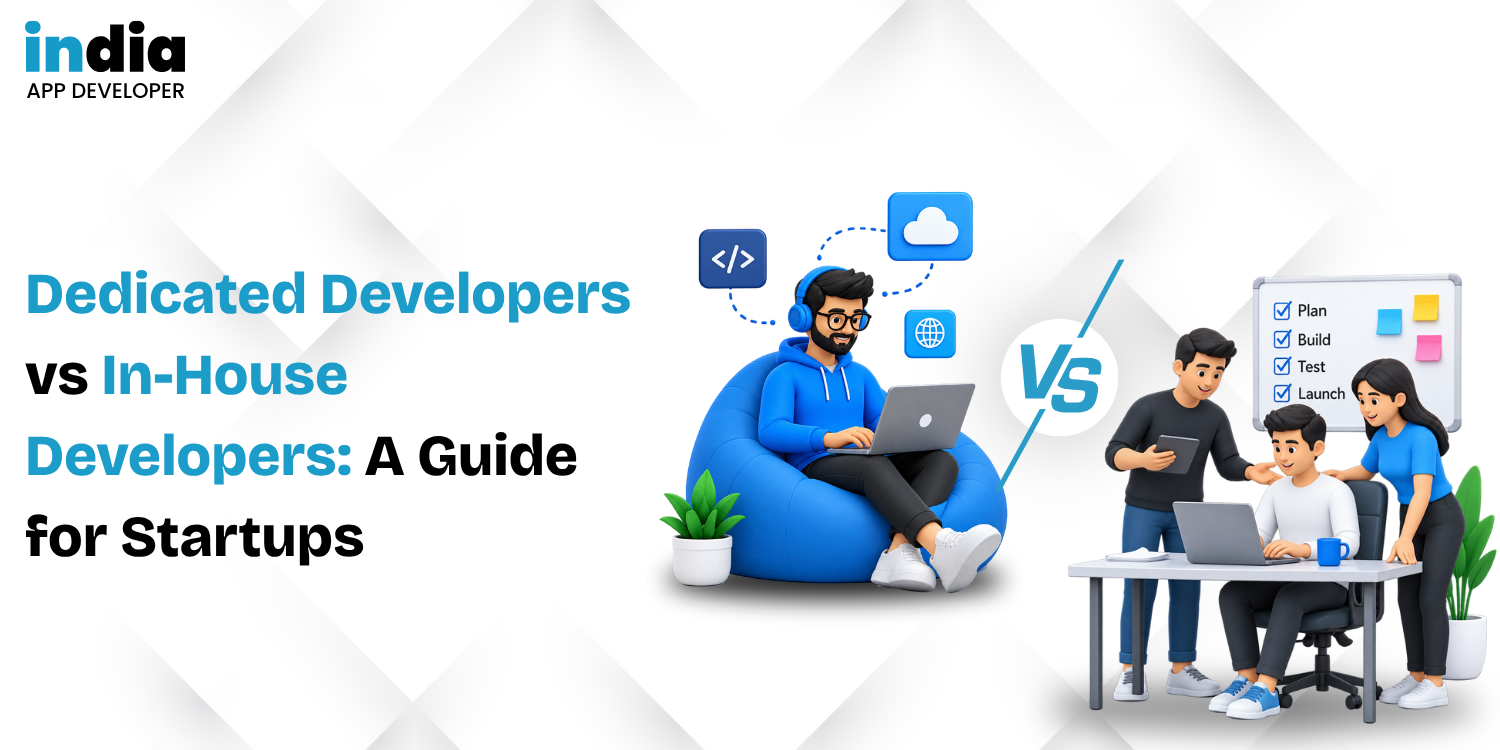
| Dedicated developer | Long-term projects | Regular involvement in the project | Need project management |
| In-house development team | Long-term solutions | Direct (complete control) | Recruitment, employment, and overhead expenses |
For businesses that need ongoing technical support and greater control over development, hire dedicated developers based on the project’s required skills, workload, and duration. This model can provide consistent involvement while allowing businesses to scale development resources as project requirements change.
Step 3: Decide on what type of developer you want to hire
When you plan to hire React Native developers , choosing the right experience level is important for your project’s success. Not every app development project needs a senior developer with several years of experience. Sometimes, a junior developer can handle complex problems without any errors. So, don’t focus on experience only; consider knowledge, cost, and technology updates as well.
| Developer level | Typical experience | Key responsibilities |
| Junior | 0-2 years | Basic development tasks, UI implementation, API integration, debugging, and app updates |
| Mid-level | 2-5 years | Feature development, APIs, testing, state management |
| Senior | 5+ years | React Native architecture, native modules, advanced state management, native iOS and Android integration |
Step 4: Checking various skills
Once you have shortlisted potential developers or development teams, evaluate their technical expertise, practical experience, and communication skills. A strong React Native developer should be able to handle both common development tasks and project-specific technical challenges.
Technical skills
Look for experience with React Native, React, JavaScript, TypeScript, state-management solutions such as Redux, RESTful APIs, GraphQL, Git, Firebase, testing frameworks, application architecture, and performance optimization.
UI/UX skills
The developer should understand responsive layouts, navigation, forms, interactive components, animations, accessibility, and platform-specific UI requirements for iOS and Android.
API and backend integration
Experience with REST APIs, authentication, error handling, cloud services, WebSockets, third-party integrations, and secure data handling can be important depending on your application.
Communication skills
Clear communication is essential for understanding requirements, discussing technical decisions, providing progress updates, identifying potential issues, and collaborating effectively with designers, backend developers, QA teams, and other stakeholders.
Step 5: Reviewing the portfolios
The portfolio of a developer can showcase practical experience that a resume may fail to show. Review previous React Native apps and examine their technical contributions, platform experience, integrations, and ability to solve real-world challenges in development.
While reviewing their portfolio, you can ask questions such as:
- Did they build the app themselves?
- What was their precise role?
- Was it built using React Native?
- How complex was the app development requirement?
- Did they work on the backend?
- Did they handle deployment?
- Did they overcome performance challenges?
- Did they work with third-party APIs? If yes, which ones?
- Is the app still maintained by them?
Step 6: Conduct an Interview and Evaluate Communication Skills
After reviewing portfolios, interview shortlisted React Native developers to understand their technical approach, problem-solving ability, communication style, and project experience.
Ask questions such as:
- What was your role in previous React Native projects?
- How did you structure the application?
- Which state management approach did you use, and why?
- How did you handle APIs, authentication, and performance issues?
- How did you manage platform-specific iOS and Android requirements?
- How did you handle changes in project requirements?
Also evaluate how clearly the developer communicates, understands your requirements, provides updates, identifies potential issues, and collaborates with other team members.
Look for someone who combines technical knowledge with practical problem-solving, clear communication, and a willingness to learn.
Step 7: Conduct a practical coding assessment
A short coding task can offer valuable insight into a developer’s problem-solving capability and coding practices. Create a small and realistic task related to your project and evaluate how the candidate approaches API handling, error handling, architecture, UI, state management, documentation, testing, and Git.
You can create a short assignment where the developer can be asked to create:
- A home screen
- A login screen
- A simple API request
- Navigation between screen
- Loading and error states
Step 8: Discuss support and maintenance
React Native apps need regular maintenance post-deployment to remain stable, secure, and compatible with changing operating systems. Before hiring a React Native developer, discuss post-deployment support capabilities, response times, update process, bug fixes, and future feature development services.
- Android and iOS compatibility updates
- Bug fixing and performance monitoring
- Security updates and technical maintenance
- Google Play and App Store support
Step 9: Discuss security and data protection
Security should be considered prior to development, not after the app is built. What if your product doesn’t meet their security protocols and standards later? Avoid any risk and discuss everything in detail before signing the deal. Ask the developer how they will handle the following:
- User authentication
- Passwords
- Sensitive user data
- Payment data
- Secure storage
- Data encryption
- Third-party SDKs
- API security
- Access permissions
- Tokens
If you are creating fintech, healthcare, ecommerce, or enterprise apps, security requirements become even more important because you will be handling personal and sensitive data of many people. So, taking security measures or not is not an option. Strong security practices help protect user data, reduce potential risks, and build greater trust in your application.
Step 10: Begin with an MVP or small project
If you are not sure about a developer or development team, it is not necessary to begin with a large project. Understandably, you don’t want to take any risk by giving your well-planned idea and business structure to any stranger. There are some alternative and smart options to choose the best team for your dream project. Shortlist a company and give them a small project or have a small meeting with their team.
Consider starting with:
- Prototype
- Proof of concept
- MVP
- Small development milestone
This provides you with the opportunity to assess and evaluate:
- Code quality
- Speed of delivery
- Ability to follow requirements
- Communication
- Problem-solving approach
- Testing
- Documentation
If the experience and outcome are positive, you can gradually go for a higher engagement. But if you feel any doubt or confusion, you can discuss it clearly with them. This will help you to get transparent communication throughout the process if you decide to proceed with them.
How Much Does It Cost to Hire a React Native Developer?
The cost of hiring a React Native developer depends on factors such as experience, project complexity, technical requirements, engagement model, location, and project duration. These factors also influence the overall React Native app development cost for a project
Your hiring model also affects the budget:
- Freelancer: Suitable for small or short-term projects.
- Dedicated developer: Ideal for ongoing development and long-term projects.
- Development company: Suitable for complex projects requiring development, UI/UX, QA, project management, and ongoing support.
- In-house team: Offers greater control but involves recruitment, salaries, and other employment costs.
The overall budget can also increase with advanced features such as payment gateways, real-time communication, third-party APIs, maps, custom backend systems, security requirements, and platform-specific functionality.
When planning your budget, consider the total project cost rather than the hourly rate alone. Development, testing, deployment, maintenance, and future updates can all affect the final cost. Defining your requirements and comparing developers based on experience, technical skills, communication, and overall value can help you choose the right option.
Common Mistakes to Avoid When Hiring a React Native Developer
Hiring the right React Native developer requires more than comparing resumes and hourly rates. Avoid these common mistakes during the hiring process:
- Choosing based only on price: A lower hourly rate does not always mean lower overall development costs.
- Not checking relevant experience: Review previous React Native projects that are similar to your requirements.
- Skipping technical assessment: A practical assessment can reveal problem-solving and coding abilities that a resume may not show.
- Ignoring communication: Poor communication can lead to misunderstandings, delays, and unnecessary revisions.
- Not defining project requirements: Clearly document features, platforms, integrations, timelines, and expectations before development begins.
- Overlooking post-launch support: Discuss bug fixes, updates, maintenance, and future improvements before signing the agreement.
- Failing to clarify ownership: Confirm ownership of source code, designs, documentation, accounts, and other project assets before starting the project.
Avoiding these mistakes can make the hiring process more transparent and help you choose a React Native developer or development team that aligns with your technical requirements, business goals, and project expectations.
Conclusion
Hiring the right React Native developer in 2026 requires more than comparing resumes, experience, or hourly rates. The right developer should understand your project requirements, communicate clearly, solve technical challenges effectively, and follow reliable development and testing practices.
Start by defining your project scope, features, timeline, budget, and technical requirements. Then choose the hiring model that best fits your needs, whether that is a freelancer, a dedicated developer, or a React Native app development company. Review relevant portfolios, evaluate technical and communication skills, conduct a practical assessment, and discuss security, maintenance, and post-launch support before making a decision.
React Native remains a practical choice for businesses that want to build applications for both iOS and Android while sharing a common codebase. However, the success of the project depends not only on the technology but also on the expertise and approach of the development team.
Taking the time to evaluate developers carefully can help you reduce development risks, avoid unnecessary costs, and build a mobile application that is reliable, scalable, and aligned with your business goals.
FAQs
1. Why should I hire React Native developers in India?
Hiring React Native developers in India offer several advantages. These include access to a large talent pool, cost efficiency, streamlined communication, seamless collaboration with international businesses, flexible engagement models to choose from and long-term support.
2. Should I hire a React Native app development company or a freelancer?
A freelancer would be suited for small projects or features. However, if your app development requirements are complex, where you need complete development including UI/UX, backend, QA, deployment, and maintenance, a React Native app development company would be an ideal choice.
3. How much does React Native app development cost?
The cost of React Native app development depends on various factors such as app complexity, specific features, number of third-party integrations, geographic location of the development team, and more.
4. How long does it take to build a React Native app?
The timelines for React Native app development varies from few weeks to several months depending on the complexity, features, and integrations.
5. I am planning to hire React Native developers for my project. How do I assess their technical skills?
Review portfolios, take small coding tests, evaluate real-world problem-solving skills, and discuss previous React Native projects. A dedicated team of developers can also help you to choose the best resource for your project because they work dedicatedly on your project till launch to avoid any distraction.